Memodyne Official Website › Blog
From the reading roomWhen A Bottle And A Sales Page Disagree
Five of the six ingredient names match exactly. The sixth does not. This is what that kind of disagreement usually means, which source a careful reader should follow, and why this particular line is worth knowing about.
Most of the time, a product's label artwork and its sales page agree, because one was copied from the other. When they do not, it is worth stopping to look, because the difference usually tells you something about how a product was put together.
This is a small example of the genre and it is worth writing down carefully rather than glossing over.
The disagreement, stated precisely
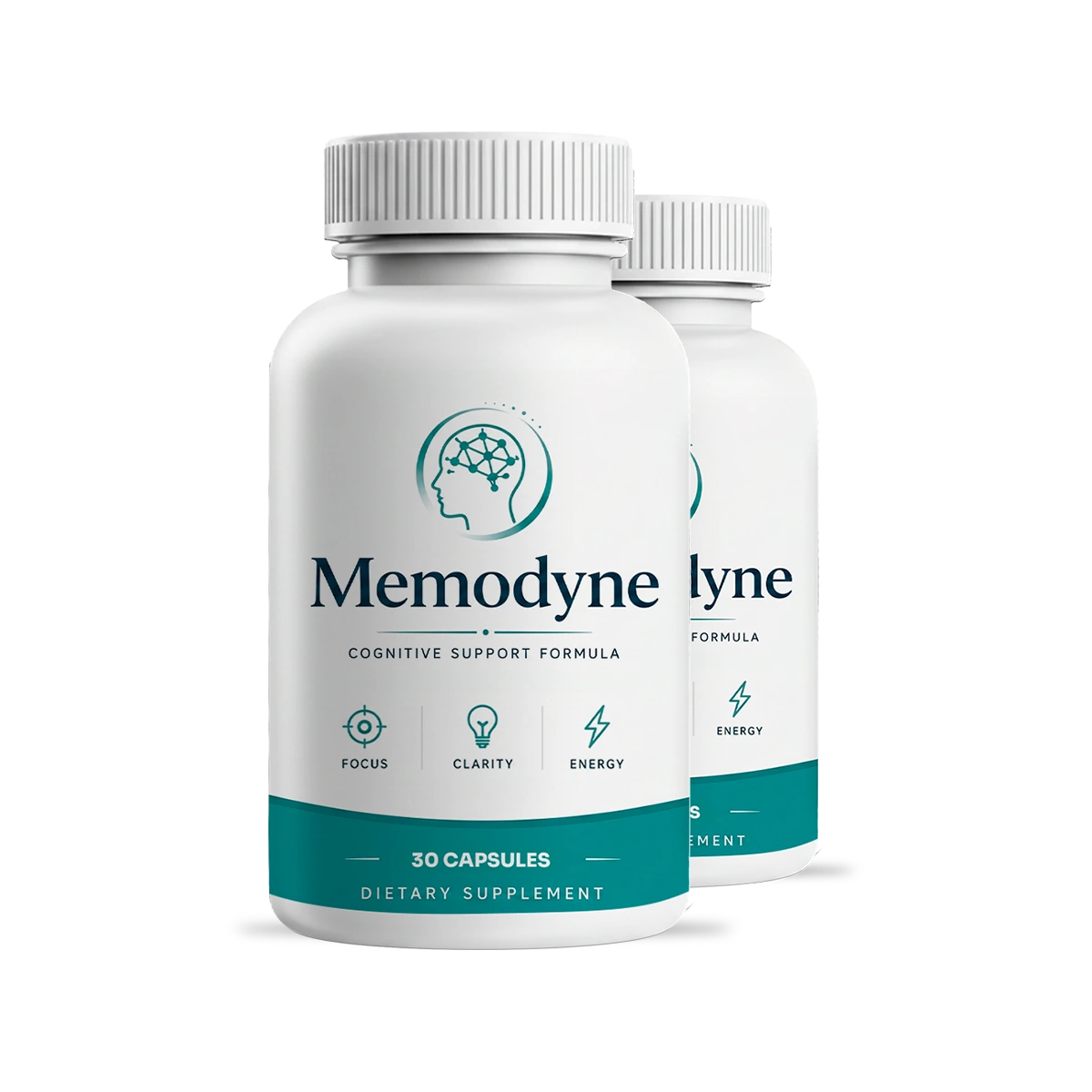
The listing artwork supplied with this product names six ingredients in six tiles arranged around the bottle. The seller's own sales page also names six. Five of the six match exactly: niacin, L-arginine, L-arginine AKG 2:1, L-citrulline HCl and L-citrulline malate.
The sixth does not. The artwork's sixth tile reads CALCIUM. The sales page prints beta-alanine in its place.
| Position | On the listing artwork | On the seller's sales page |
|---|---|---|
| 1 | Niacin | Niacin |
| 2 | Calcium, as calcium carbonate | Beta-alanine |
| 3 | L-Arginine | L-Arginine |
| 4 | L-Arginine AKG 2:1 | L-Arginine AKG 2:1 |
| 5 | L-Citrulline HCl | L-Citrulline HCl |
| 6 | L-Citrulline Malate | L-Citrulline Malate |
Two sources, one differing line, and no way to reconcile them from outside the company.
Those two compounds are not close relatives. Calcium carbonate is a mineral, the chalk in an antacid tablet and the calcium in most bone-density supplements. Beta-alanine is an amino acid used in sports nutrition, whose reliable and harmless signature effect is a tingling of the skin. They do different things, they are studied in different fields, and neither is a substitute for the other.
Which source wins, and why
This desk follows the bottle, and the reasoning is worth setting out because it is a rule rather than a preference in this particular case.
The label artwork is the regulated statement that appears on the container a buyer actually receives. It is what will be in the kitchen when the parcel is opened, it is what a reader can photograph and check, and it is the document that federal labelling rules govern. A sales page is marketing copy that can be rewritten in an afternoon by somebody who never saw the formulation sheet.
So the artwork is printed here, and the difference is printed beside it rather than being smoothed away. The alternative approaches are both worse: following the sales page means printing something that will not match the bottle, and merging the two lists into seven ingredients means publishing a formula that no source describes.
Where a container and a sales page disagree, the container is the fact, and the disagreement itself is worth telling a reader about.
How a difference like this arises
There are three ordinary explanations and none of them requires bad faith.
A reformulation is the commonest. A formula changes, one supplier is swapped for another, new artwork is produced, and the sales page is updated on a different schedule by a different person. For a period, the two describe different versions of the same product.
A template error is the second. Sellers with several formulas often build listings from a shared template, and beta-alanine is a standard member of this ingredient family. It appears on sibling products from the same category. A line carried across from a neighbouring page is a mundane mistake that happens constantly.
And artwork produced ahead of a locked formulation is the third. Marketing material is often commissioned before the final sheet is signed off, which means the artwork can describe an earlier draft or a later one. Whichever of the three it is, a buyer cannot tell from outside, and that is exactly why the printed panel matters.
Why this particular line matters
A reader might reasonably ask whether one differing line out of six is worth an article. Two things make this one worth knowing about.
The first is practical and it concerns stacking. Anybody already taking a calcium supplement for bone density is receiving several hundred milligrams a day, and calcium binds several medicines in the gut, including levothyroxine and some antibiotic classes. If the capsule contains calcium carbonate, that is a second source to account for. If it contains beta-alanine instead, it is not. Those are different conversations to have with a prescriber.
The second is that the two compounds have completely different evidence attached to them, which changes what a reader should expect. Beta-alanine has a body of sports-nutrition research and one brain-imaging result. Calcium's cognitive literature is thin, observational and points in an unhelpful direction.
- Calcium carbonate stacks with an existing bone-density supplement; beta-alanine does not.
- Calcium binds certain thyroid and antibiotic prescriptions in the gut.
- Beta-alanine's signature effect, paraesthesia, is a harmless skin tingling that alarms people who were not warned about it.
- The two are studied in different fields and by different groups.
- Only the printed panel can tell a buyer which one is actually in the capsule.
What the record says about calcium and cognition
Since the artwork names calcium and this desk follows the artwork, the evidence deserves a fair and complete account rather than a convenient one.
There is one cognitive-outcome paper attached to supplemental calcium worth citing. A seven-year longitudinal analysis in ageing women found that reported calcium supplement use was independently associated with roughly threefold higher odds of cognitive decline, with an odds ratio of 3.64 and a 95 per cent confidence interval of 1.47 to 9.01. Cognitive decline occurred in 26 per cent of participants overall, and 12 per cent reported taking calcium.
Every caveat that belongs on that finding belongs on it loudly. It is observational rather than randomised, so it cannot establish cause. It concerns supplemental calcium at bone-medicine amounts, which are several hundred milligrams a day. It is in ageing women specifically. And no amount of calcium is printed for this capsule at all, so nobody can say from outside whether it is comparable to anything in that study.
It is printed here for one reason. It is the only cognitive-outcome paper attached to any name on this artwork, and it does not flatter the product. Leaving it out because it is inconvenient would be the worse choice, and a reader who finds it later without this context is entitled to wonder what else was left out.
How common is this, and what else to check for
A reader who has just found one discrepancy will reasonably wonder whether to expect more, and the answer is that this family of problem is ordinary enough to be worth a short checklist of its own.
Three kinds of mismatch turn up repeatedly across this shelf. An ingredient named on one surface and absent from another, which is the case here. A serving size that differs between the listing and the container, which quietly halves or doubles every amount a buyer thought they were getting. And a count that differs, where a listing describes a month's supply and the bottle holds a fortnight of it at the stated serving.
The second and third are more consequential than the first, because they change the arithmetic of the whole purchase rather than one line of it. A sixty-capsule bottle at two capsules a day and a thirty-capsule bottle at one a day are both a month, cost very different amounts to manufacture, and look nearly identical in a listing photograph.
There is a fourth worth naming because it is the hardest to spot. The same compound can appear under two names, and a list can look longer than it is. On this label, arginine appears free and as the AKG salt, and citrulline appears as the hydrochloride and as the malate. Six names, four molecules. That is a disclosure decision rather than an error, and a reader counting actives should know it is being made.
- Compare the ingredient names on the listing with the panel on the container.
- Compare the serving size on both, because every amount depends on it.
- Compare the capsule count with the supply the listing describes.
- Count molecules rather than names, since salts and free forms both count as one name each.
- Read the other-ingredients line, where the capsule shell is declared.
How to settle it in thirty seconds
None of this has to remain unresolved for the person holding the bottle.
Federal labelling rules require a Supplement Facts panel on the container. Find it, photograph it while the box is still open, and read the second line. Whatever it names is the answer, and it overrides both the artwork and the sales page, because it is the statement on the product itself.
Two other things are worth doing in the same thirty seconds. Read the niacin figure against the 35 milligram upper intake level, because it is the only figure on the panel with a published reference point beside it. And read the other-ingredients line, which is where the capsule shell is declared and where a vegetarian claim is actually settled.
A photograph sent to the editorial address changes this article and moves the review date at the foot of the page. A correction that arrives is published rather than quietly applied.
Let a Memodyne panel settle the question the artwork leaves open
Five of six names match across both sources. The sixth is decided by the printed panel on the container, and the sixty-day window runs from the moment of purchase while you check it.
Two bottles $158 · six bottles $294 · 60-day money-back guarantee
Order Memodyne From This DeskLot MEM-26/MA-2612 · one capsule a day, 30 to a bottle · ships from the United States
- Rabec M, Bourgeais A, Gautier J, Corvaisier M, Brière O, Annweiler C. Association between calcium supplement use and cognitive impairment in ageing women: a longitudinal analysis. Australas J Ageing. 2026;45(2):e70186. PMID 42159347. https://pubmed.ncbi.nlm.nih.gov/42159347/
- National Institutes of Health, Office of Dietary Supplements. Calcium: fact sheet for health professionals. Bethesda, MD. https://ods.od.nih.gov/factsheets/Calcium-HealthProfessional/
- Ambrosio G, Wirth D, Joseph JF, Mazzarino M, de la Torre X, Botrè F, Parr MK. How reliable is dietary supplement labelling? Experiences from the analysis of ecdysterone supplements. J Pharm Biomed Anal. 2020;177:112877. PMID 31568967. https://pubmed.ncbi.nlm.nih.gov/31568967/
- US Food and Drug Administration. Label claims for conventional foods and dietary supplements. Silver Spring, MD. https://www.fda.gov/food/nutrition-food-labeling-and-critical-foods/label-claims-conventional-foods-and-dietary-supplements
- Minto C, Vecchio MG, Lamprecht M, Gregori D. Definition of a tolerable upper intake level of niacin: a systematic review and meta-analysis of the dose-dependent effects of nicotinamide and nicotinic acid supplementation. Nutr Rev. 2017;75(6):471-490. PMID 28541582. https://pubmed.ncbi.nlm.nih.gov/28541582/