Memodyne Official Website › Blog
From the reading roomHow Long Does Memodyne Take To Work?
The distributor reports four to eight weeks. The trials behind the ingredients measured at four and twelve. Here is what that means week by week, and why the refund window makes the answer a practical question rather than an academic one.
Every category has one question that gets asked before any other, and in this one it is how long. It is a fair question, it has a real answer, and the answer is longer than most buyers want.
The short version: the distributor's own reading of its reviews puts the wait at 4 to 8 weeks, its roster of eight buyers is dated between day 22 and day 55, and the published trials behind the ingredients on this label measured their endpoints at four weeks and twelve weeks. Nothing anywhere in that record supports expecting anything at all in week one.
Why week one is the wrong place to look
The commonest complaint in the distributor's published review set is some version of wanting more in the first week. It appears in five of the eight reviews, and it is the fairest criticism in the set because the disappointment is real even though the expectation was never supported by anything.
The reason is in the mechanism rather than in the brand. This formula is built on nitric-oxide chemistry: citrulline is absorbed, the kidney converts it to arginine, and arginine is the substrate the body uses to make nitric oxide, which relaxes blood vessels. Plasma arginine can rise within days. That is a laboratory measurement and not a sensation. The endpoint underneath it, endothelial function, is a property of a blood-vessel lining, and a lining does not change its behaviour over a weekend.
There is a second reason worth stating, and it is uncomfortable. A supplement that produced a clear cognitive change inside seven days would be doing something a nutrient is generally not able to do. When a product in this category does deliver a sharp first-week effect, the usual explanation is a stimulant. Nothing on this label is one, and the word Energy on the front band is a claim rather than an ingredient.
What the trials measured, and when
The honest way to answer a timeline question is to say what was measured, in whom, at what amount and at what point. Here is that, for the ingredients this label names.
| Study | Amount | Population | Measured at | Found |
|---|---|---|---|---|
| Crossover pharmacokinetic trial | 3 g twice daily | 20 healthy volunteers | One week | Plasma arginine up; arginine to ADMA ratio 186 to 278 |
| Vascular trial in older adults | 6 g daily | 16 adults, mean age 62 | Four weeks | Dilation, leg stiffness, aortic pressure and fasting glucose all improved |
| Long trial in healthy adults | 3,000 mg daily | 66 adults, mean age 63 | Twelve weeks | Dilation improved only in the high-normal blood pressure subgroup |
| Arginine AKG trial | 10 g daily | 40 runners aged 14 to 17 | Twelve days | Jump height maintained where placebo declined |
Every row is a trial of one ingredient at a stated amount. No trial of this capsule, or of this combination of six ingredients, exists.
Read the table and a pattern is obvious. The fastest measurable change in the set is a blood measurement after a week at six grams a day. The outcomes a person might conceivably notice were measured at four weeks and twelve, and the twelve-week study found its effect only in the participants who had room to improve.
Where the four-to-eight-week figure comes from
The distributor states that most buyers wait 4 to 8 weeks. That is its own summary of its own review set, so it is worth knowing what it is and what it is not.
It is a real statement about a real set of customer reviews. It is not an audited figure, this desk cannot check the transactions behind it, and a seller summarising its own reviews is not a neutral party. What makes it worth printing anyway is that it points in the unhelpful direction. A seller inventing a timeline would invent a shorter one.
The eight-buyer roster gives it some support. Its entries are dated days 22, 22, 24, 29, 43, 44, 51 and 55, which is a tight cluster. Whatever those buyers concluded, they concluded it between three and eight weeks.
- Four of the eight were written before day 30.
- The other four were written between day 43 and day 55.
- Six of the eight had bought three or six bottles.
- The lowest score in the set, three stars, was written on day 29.
- The four- and five-star entries average day 37.
The two clocks that run from the day you pay
This is where a timeline stops being academic. Two clocks start at the moment of purchase and they do not line up.
The first is the guarantee: 60 days from the date of purchase, not from delivery. The second is the seller's requirement of 30 days of use before a refund claim. Together they leave roughly day 30 to day 60 as the span in which a buyer can both know something and act on it.
Set that against a reported wait of 4 to 8 weeks and the overlap is real but narrow. A buyer who starts on the day the parcel lands and reviews the decision at week six is comfortably inside both clocks. A buyer who leaves the box unopened for a fortnight has spent a third of the window before the first capsule.
Put day 50 in a calendar on the day of purchase. It leaves ten days of margin for a missed call, a weekend or a slow post, and it costs nothing at all.
How to run a fair test on yourself
A supplement trial of one person is a weak design, but it is the design everybody actually runs, and it can be made considerably less weak with four decisions taken before the first capsule.
Write down one concrete thing before starting. Not a feeling: names at work, the second read of a paragraph, the reason for walking into a room. A vague impression at week six will be compared against a vague memory of week one, and vague against vague always favours whatever you spent money on.
Change one thing at a time. Beginning a capsule in the same week as an earlier bedtime makes the result uninterpretable, and the sleep is more likely to have done the work. Count the capsules rather than the days, because a bottle that outlasts its month is an honest record of the mornings that were skipped. And set the decision date in advance, so that the decision is not being made on the day the money stops being recoverable.
Who tends to notice something, and who does not
There is a pattern in the trial literature that almost never makes it into a product description, and anyone weighing a timeline should know about it because it changes who should expect what.
The twelve-week citrulline study is the clearest example. Sixty-six healthy adults averaging 63 took 3,000 mg a day or placebo. Across the whole sample, flow-mediated dilation did not significantly improve. In the participants whose blood pressure was high-normal at the start, it did. The paper's own conclusion is that baseline blood pressure influences the vascular response to citrulline.
The four-week study points the same way from a different direction. Its participants were adults around 62 with type 2 diabetes, a group with measurably impaired endothelial function, and it moved dilation, arterial stiffness, aortic systolic pressure and fasting glucose in four weeks rather than twelve.
Put those two together and the reading is uncomfortable but useful. This chemistry appears to do most of its work where there is something to repair. A forty-year-old with textbook blood pressure and healthy arteries is the person least likely to register anything, which is the reverse of how supplements in this category are usually sold. It also explains a scatter of reviews in which some people describe a clear change and others describe none at all, without either group being wrong about their own experience.
None of that is a way of explaining away a disappointing result. It is a reason to be honest before buying about which group you are likely to be in, and a reason for anyone whose blood pressure is already being treated to have the conversation described on the side effects page first.
What would move faster, and why it is not in a bottle
It is worth naming the alternatives, because a buyer asking how long deserves to know what else is on the table.
Four things carry randomised evidence for cognitive outcomes in adults: hearing treatment, blood-pressure treatment, physical activity and sleep. The 2024 Lancet standing Commission on dementia lists fourteen modifiable risk factors and no supplement appears among them. None of the four is fast either. The ACHIEVE hearing trial measured at three years and found nothing across its whole cohort, with the effect appearing in a higher-risk subgroup.
So the honest answer to how long is that this category is slow, the things that beat it are slower, and the practical question is not whether four to eight weeks is a long time. It is whether the window is long enough to find out, and at sixty days from purchase it is, provided the first capsule is taken on the day the parcel arrives.
Nothing here says that Memodyne improves memory. No trial of this product or this combination exists, the label's claims are structure and function statements, and these statements have not been evaluated by the Food and Drug Administration.
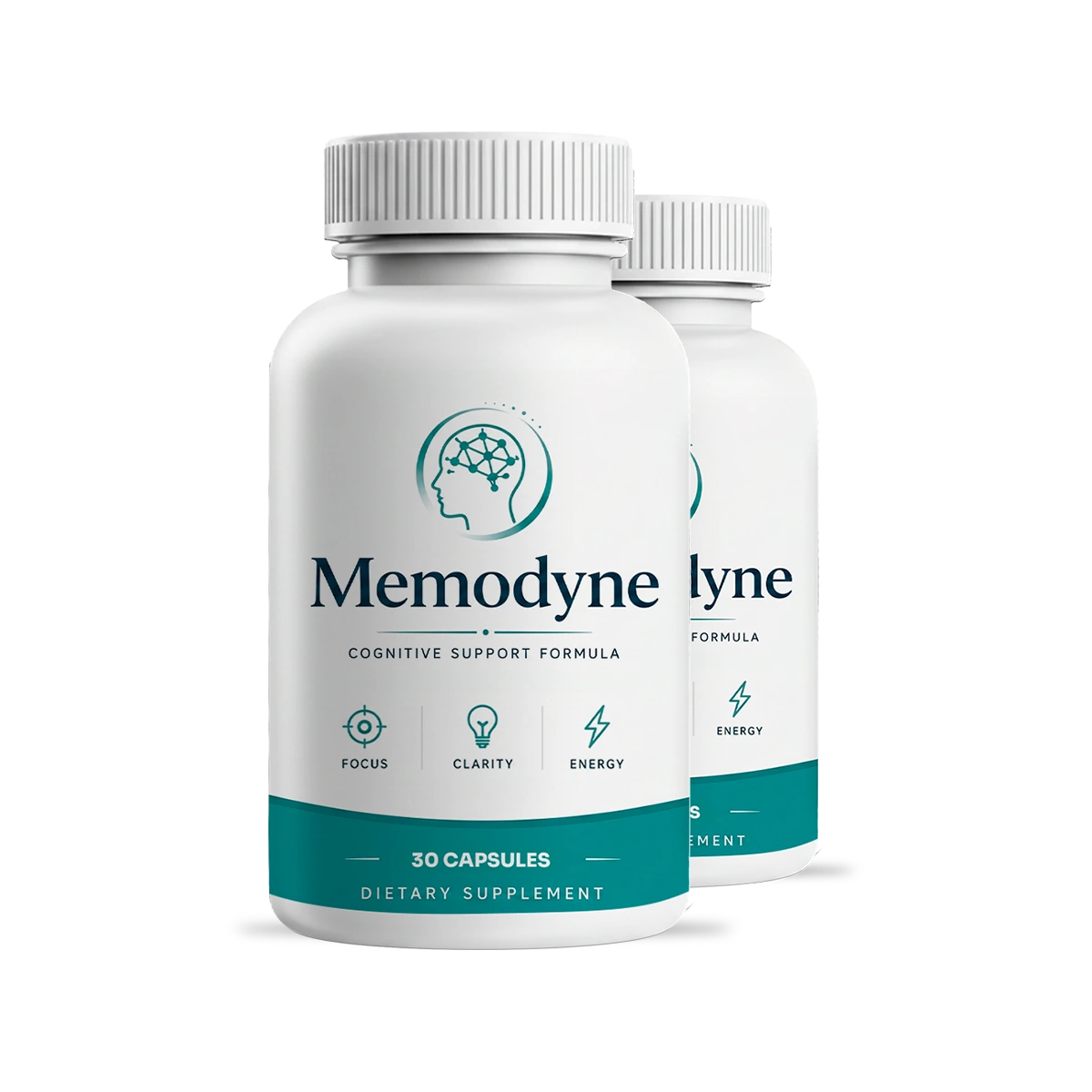
Start the Memodyne clock on the day the parcel arrives
Four to eight weeks is the reported wait and sixty days is the window. The two fit together only if the first capsule is taken on day one.
Two bottles $158 · six bottles $294 · 60-day money-back guarantee
Order Memodyne From This DeskLot MEM-26/MA-2612 · one capsule a day, 30 to a bottle · ships from the United States
- Schwedhelm E, Maas R, Freese R, Jung D, Lukacs Z, Jambrecina A, Spickler W, Schulze F, Böger RH. Pharmacokinetic and pharmacodynamic properties of oral L-citrulline and L-arginine: impact on nitric oxide metabolism. Br J Clin Pharmacol. 2008;65(1):51-9. PMID 17662090. https://pubmed.ncbi.nlm.nih.gov/17662090/
- Nogimura D, Nagaoka K, Ogino K, Ogino N, Moriyasu K, Morita M. Vascular effects of l-citrulline supplementation in healthy adults are largely influenced by the prehypertensive range of blood pressure: a double-blind, randomized, placebo-controlled, parallel-group study. Nutr Res. 2026;150:157-173. PMID 42142423. https://pubmed.ncbi.nlm.nih.gov/42142423/
- Kang Y, Dillon KN, Levitt DE, Figueroa A. Effects of L-citrulline supplementation on endothelial function, arterial stiffness, and blood glucose level in the fasted and acute hyperglycemic states in middle-aged and older adults with type 2 diabetes. Nutrients. 2025;17(23):3739. PMID 41374029. https://pubmed.ncbi.nlm.nih.gov/41374029/
- Kaczka P, Kubicka K, Batra A, Maciejczyk M, Kopera E, Bira J, Zając T. Effects of co-ingestion of β-hydroxy-β-methylbutyrate and L-arginine α-ketoglutarate on jump performance in young track and field athletes. Nutrients. 2021;13(4):1064. PMID 33805883. https://pubmed.ncbi.nlm.nih.gov/33805883/
- Livingston G, Huntley J, Liu KY, Costafreda SG, Selbæk G, Alladi S, et al. Dementia prevention, intervention, and care: 2024 report of the Lancet standing Commission. Lancet. 2024;404(10452):572-628. PMID 39096926. https://pubmed.ncbi.nlm.nih.gov/39096926/
- Lin FR, Pike JR, Albert MS, Arnold M, Burgard S, Chisolm T, et al. Hearing intervention versus health education control to reduce cognitive decline in older adults with hearing loss in the USA (ACHIEVE): a multicentre, randomised controlled trial. Lancet. 2023;402(10404):786-797. PMID 37478886. https://pubmed.ncbi.nlm.nih.gov/37478886/