Memodyne Official Website › Blog
From the reading roomCitrulline And The Brain: What The Trials Measured
It is the strongest name on this bottle and it deserves a fair hearing. It is also an ingredient whose entire published record concerns arteries rather than memory, and the gap between those two things is the honest subject here.
If a reader is going to check one ingredient on this label, it should be citrulline. It appears twice, as the hydrochloride and as the malate, it has the most human evidence of anything in the formula, and the evidence is genuinely interesting.
It is also, on close reading, evidence about arteries. Every controlled trial cited on this page measured a blood vessel, a blood pressure or a blood marker. None of them asked anybody to remember anything. That gap is the subject of this article, and it is not a criticism of the ingredient so much as a description of what is known about it.
Why citrulline and not arginine
Nitric oxide is made from the amino acid arginine, so the obvious supplement is arginine. The obvious supplement does not work very well, and the reason is a single enzyme.
The intestinal wall is rich in arginase, which converts arginine to ornithine and urea. A large share of an oral arginine dose is therefore dismantled before it reaches the bloodstream. A stable-isotope study in humans followed a labelled arginine meal and traced how much of it went to urea synthesis rather than to nitric oxide.
Citrulline is not a substrate for arginase. It is absorbed, it reaches the kidney, and the proximal tubule converts it to arginine there, past the point where the gut could have destroyed it. The result is the slightly counterintuitive fact that the best way to raise plasma arginine is not to take arginine.
Oral citrulline raises plasma arginine more effectively than oral arginine does, and that was demonstrated in a randomised crossover trial rather than argued from first principles.
The three trials that matter
Three controlled studies carry most of the weight, and they are worth laying out with their amounts and populations attached.
| Trial | Design | Amount | Population | Result |
|---|---|---|---|---|
| Pharmacokinetic crossover | Double-blind, randomised, placebo-controlled, six regimes | Up to 3 g twice daily for one week | 20 healthy volunteers | Plasma arginine up dose-dependently; arginine to ADMA ratio 186 to 278; urinary nitrate and cyclic GMP up; no change in dilation over baseline |
| Twelve-week parallel trial | Double-blind, randomised, placebo-controlled | 3,000 mg daily | 66 adults, mean age 63 | Dilation improved at week 12 only in the high-normal blood pressure subgroup; blood 3-nitrotyrosine fell overall |
| Four-week trial in type 2 diabetes | Randomised, placebo-controlled | 6 g daily | 16 adults, mean age 62 | Dilation, femoral-ankle stiffness, aortic systolic pressure and fasting glucose all improved |
Three grams a day is the lowest amount in the set that produced a vascular result, and it took twelve weeks in a selected subgroup.
Two details in that table deserve more attention than they usually get. The first is that the pharmacokinetic study reported no improvement in flow-mediated dilation over baseline in any arm, and said so plainly. The second is that the twelve-week trial found its effect in a subgroup and not across the whole sample. Both are the kind of qualification that disappears when a finding travels into marketing copy.
What flow-mediated dilation actually is
Since it is the endpoint in two of the three trials, it is worth knowing what it measures.
A cuff is inflated on the upper arm to occlude the brachial artery for several minutes. When it is released, blood rushes back, the shear stress on the vessel lining triggers nitric-oxide release, and the artery widens. Ultrasound measures how much. The percentage change is flow-mediated dilation, and it is a well-validated marker of endothelial function.
It is a good measurement and it is a measurement of an artery in a forearm. It correlates with cardiovascular risk across populations. It is not a cognitive test, it has never been claimed to be one, and a product sold for memory that rests on it is resting on a proxy several steps removed from the thing being sold.
The step nobody has measured
Here is the chain a memory product built on citrulline is implicitly asking a buyer to accept. Citrulline raises plasma arginine. Arginine raises nitric oxide. Nitric oxide widens blood vessels. Wider vessels improve cerebral perfusion. Better perfusion improves cognition.
The first three links have controlled human evidence. The fourth is plausible and has been studied in other contexts. The fifth is where the chain stops, and no trial cited anywhere on this website bridges it.
That does not make the chain false. It makes it unmeasured, and there is an important difference between an unmeasured hypothesis and a disproven one. What it does mean is that anybody selling the fifth link as established is selling something the literature has not delivered.
- Citrulline raises plasma arginine: demonstrated in a randomised crossover trial.
- Citrulline improves vascular endpoints: demonstrated at 3 g and 6 g a day, in selected populations.
- Citrulline improves cerebral blood flow specifically: not established in the trials cited here.
- Citrulline improves memory or cognition: no trial cited here measured it.
- This capsule does any of the above: no trial of this product exists.
Does the malate form add anything?
Citrulline malate is citrulline paired with malic acid, and it is the form sports nutrition standardised on decades ago. The theory was that malate, a Krebs-cycle intermediate, would add something to energy metabolism on top of the citrulline.
It has now been tested directly, twice. A randomised double-blind crossover trial set a single dose of plain L-citrulline against the same dose of citrulline malate on neuromuscular performance in trained young adults. A six-week parallel trial did the same across a training block with blood biomarkers attached. Neither found the malate form superior.
For a label that already names citrulline HCl, the malate is therefore best read as a second source of the same amino acid rather than as a distinct sixth active. That is not a hidden defect and it is not unique to this product, but it does change how an ingredient list of six should be counted.
The amount problem, in one capsule
Everything above is about what citrulline does. This section is about whether a capsule can deliver it, and it is short arithmetic rather than an argument.
The lowest amount in the published set that moved a vascular endpoint was 3,000 milligrams a day, and it took twelve weeks in a selected subgroup. The shorter trial used 6,000 milligrams. The crossover study that raised plasma arginine most effectively used 3,000 milligrams twice a day.
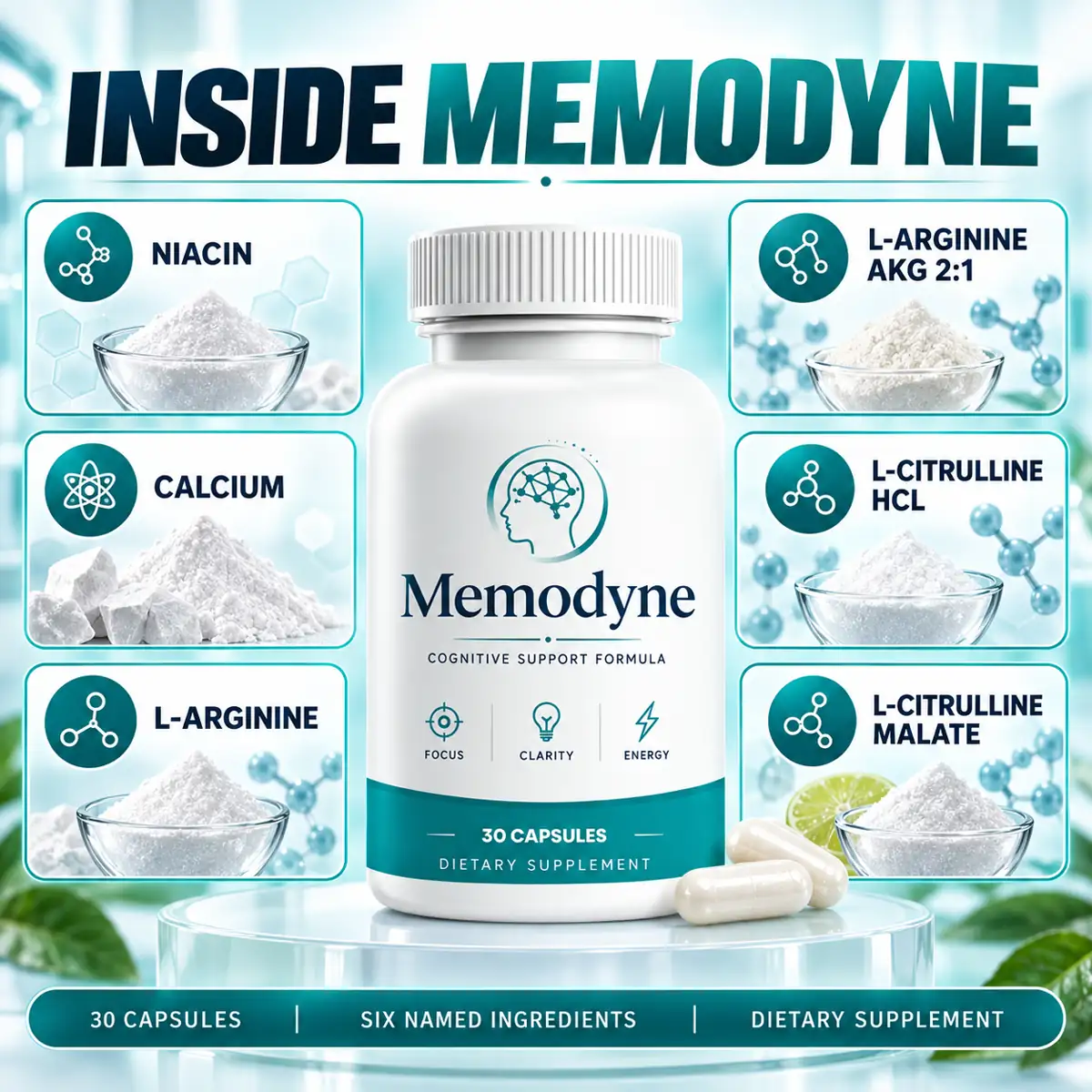
A size 0 capsule, the usual shape for a product like this, holds roughly 500 to 800 milligrams of powder in total. That total covers every ingredient on the label plus whatever flow agent keeps the filling machine running. Two forms of citrulline, two forms of arginine, a B vitamin and a mineral all share it.
So a single daily capsule cannot be carrying a trial amount of citrulline, and the same is true of every other single-capsule amino-acid product on the shelf. That is arithmetic about capsules rather than an accusation about any particular brand, and it is the reason this desk prints the trial amount in a column of its own rather than implying that the capsule matches it.
What it means practically is that the honest expectation for a product like this sits below what the trials found, by an unknown margin, because the artwork carries no figures. The printed panel on the container is the only document that can narrow that margin, and photographing it on arrival is the whole of the work involved.
What this means for reading a label
Three practical conclusions come out of all of this, and they apply to any product on this shelf rather than only to this one.
First, look for the amount. Three grams a day is the lowest amount in the published set that moved anything, and it took twelve weeks in a selected group. A label without an amount cannot be compared against that, which is why the printed panel on the container matters more than anything in the marketing artwork.
Second, check what the trial measured. An ingredient with a vascular trial behind it is an ingredient with a vascular trial behind it, and the translation into a cognitive claim is being done by the marketing rather than by the paper. Third, count molecules rather than names. Six names covering four molecules is a real disclosure decision and it is worth noticing.
A fourth is worth adding for anyone comparing two products side by side. Check the population a trial recruited, because it changes who the finding applies to. The twelve-week citrulline study found its effect in participants whose blood pressure was high-normal and not across its whole sample, and the four-week study enrolled adults with type 2 diabetes. Neither result transfers automatically to a healthy forty-year-old, and a listing that cites them will not tell you that.
Nothing here claims that Memodyne improves memory or treats any condition. These statements have not been evaluated by the Food and Drug Administration, and this product is not intended to diagnose, treat, cure or prevent any disease.
The citrulline evidence, read properly, before a Memodyne pack
The best-evidenced name on this label, the three trials behind it, and an honest account of the step nobody has measured.
Two bottles $158 · six bottles $294 · 60-day money-back guarantee
Order Memodyne From This DeskLot MEM-26/MA-2612 · one capsule a day, 30 to a bottle · ships from the United States
- Schwedhelm E, Maas R, Freese R, Jung D, Lukacs Z, Jambrecina A, Spickler W, Schulze F, Böger RH. Pharmacokinetic and pharmacodynamic properties of oral L-citrulline and L-arginine: impact on nitric oxide metabolism. Br J Clin Pharmacol. 2008;65(1):51-9. PMID 17662090. https://pubmed.ncbi.nlm.nih.gov/17662090/
- Nogimura D, Nagaoka K, Ogino K, Ogino N, Moriyasu K, Morita M. Vascular effects of l-citrulline supplementation in healthy adults are largely influenced by the prehypertensive range of blood pressure: a double-blind, randomized, placebo-controlled, parallel-group study. Nutr Res. 2026;150:157-173. PMID 42142423. https://pubmed.ncbi.nlm.nih.gov/42142423/
- Kang Y, Dillon KN, Levitt DE, Figueroa A. Effects of L-citrulline supplementation on endothelial function, arterial stiffness, and blood glucose level in the fasted and acute hyperglycemic states in middle-aged and older adults with type 2 diabetes. Nutrients. 2025;17(23):3739. PMID 41374029. https://pubmed.ncbi.nlm.nih.gov/41374029/
- Gonzalez AM, Trexler ET. Effects of citrulline supplementation on exercise performance in humans: a review of the current literature. J Strength Cond Res. 2020;34(5):1480-1495. PMID 31977835. https://pubmed.ncbi.nlm.nih.gov/31977835/
- Martín-Olmedo JJ, Miras-Moreno S, Cuadra-Montes K, García-Ramos A, Ruiz JR, Jurado-Fasoli L. Malate or not? Acute effects of L-citrulline versus citrulline malate on neuromuscular performance in young, trained adults: a randomized, double-blind, placebo-controlled crossover trial. Int J Sport Nutr Exerc Metab. 2025;35(2):89-98. PMID 39662304. https://pubmed.ncbi.nlm.nih.gov/39662304/
- Bayat D, Azizi M, Behpour N, Tinsley GM. Changes in resistance training performance, rating of perceived exertion, and blood biomarkers after six weeks of supplementation with L-citrulline vs. L-citrulline DL-malate. J Int Soc Sports Nutr. 2025;22(1):2513944. PMID 40470618. https://pubmed.ncbi.nlm.nih.gov/40470618/
- Mariotti F, Petzke KJ, Bonnet D, Szezepanski I, Bos C, Huneau JF, Fouillet H. Kinetics of the utilization of dietary arginine for nitric oxide and urea synthesis: insight into the arginine-nitric oxide metabolic system in humans. Am J Clin Nutr. 2013;97(5):972-9. PMID 23535108. https://pubmed.ncbi.nlm.nih.gov/23535108/